Opening of the AUREL CIUPE (1900–1988) temporary exhibition
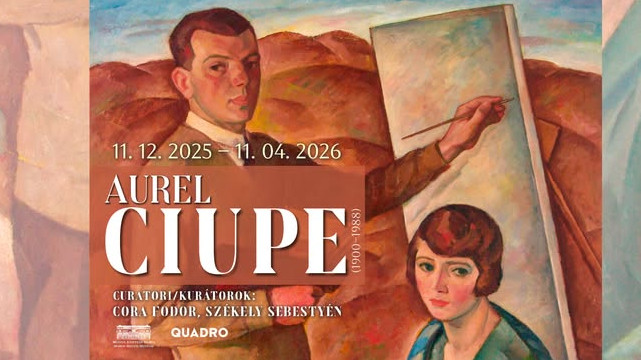
Dec-11
The exhibition commemorates the 125th anniversary of the birth of Aurel Ciupe, one of the most important figures in 20th-century Romanian cultural life – an artist, teacher, and museographer whose work significantly shaped the artistic development of Târgu Mureș and the entire region.
Born in Lugoj, Aurel Ciupe was a leading figure in modern Romanian art. As an emblematic personality of the first half of the 20th century, he combined artistic talent with pedagogy and exceptional organizational skills. He taught at art schools in Cluj-Napoca, Târgu Mureș, and Timișoara, directed art galleries in Târgu Mureș and Timișoara, was a founding member of the teaching staff at the Cluj-Napoca Art School, and founded the Free Municipal School of Painting in Târgu Mureș.
Ciupe was also a talented organizer of numerous art events and served as president of the Cluj-Napoca branch of the Union of Visual Artists. Through these activities, he became a defining figure in Transylvanian art education and artistic life.
In 1932, he was appointed instructor for fine arts courses at the Cultural Palace in Târgu Mureș and founded the Free Municipal School of Painting, which became a vibrant hub for the local art scene, with many students later achieving national recognition.
At the same time, he managed the City Art Gallery, revitalizing the collection during a period of stagnation and limited resources. Through his initiative, perseverance, and collaboration with authorities, he launched extensive acquisition and donation campaigns, significantly enriching the gallery’s holdings and value.
Under his guidance, the collection was reorganized with a modern perspective, emphasizing the quality of works, the unity of exhibitions, and the establishment of an important section dedicated to Romanian fine arts. Thanks to his work, the Târgu Mureș art gallery became a culturally significant institution, attracting audiences while fostering a new generation of artists.
In 1940, Ciupe became director of the Banat Museum in Timișoara. After the war, he settled in Cluj-Napoca, where he played a leading role in reorganizing art education and cultural life, becoming the first rector of the Ioan Andreescu Institute of Fine Arts and president of the local branch of the Union of Visual Artists.
Beyond his institutional roles, Ciupe was an original and distinctive artist. His paintings harmoniously blended traditional techniques with modern trends, balancing the impressionist desire to capture living nature with post-impressionist structuring inspired by Cézanne. His landscapes, portraits, and still lifes reflect a direct sensitivity and clarity, using the surrounding reality to express inner emotions.
The exhibition presents Ciupe’s artistic journey in chronological order and through stylistic and thematic connections. It features works from the Maramureș County Museum collection, complemented by a rich array of drawings, documents, and photographs from the Ciupe family, as well as loans from major museums and private collectors. The display coherently traces the arc of Ciupe’s development – from early experiments to the mature stylistic synthesis – highlighting the duality of instinct and reflection in his work. “Sometimes I was instinctive, sometimes rational,” the artist reflected.
A special section highlights Ciupe’s role in founding and developing the Free Municipal School of Painting in Târgu Mureș, showcasing works by his students mentioned in his memoirs and interviews.
As an artist, teacher, organizer, curator, and passionate promoter of Romanian art, Aurel Ciupe remains a defining figure in both local and national culture. His legacy continues to inspire and shape the city’s cultural identity.
Exhibition dates: December 11, 2025 – April 11, 2026
Location: Maramureș County Museum – Fine Arts Department, Cultural Palace
Organizers: Maramureș County Museum – Fine Arts Department and Quadro Gallery, Cluj-Napoca
Support: Maramureș County Council
Curators: Cora Fodor, art historian, Maramureș County Museum; Sebestyén Székely, art historian, director of Quadro Gallery
Contributors: Romanian National Museum of Art, Cluj-Napoca Art Museum, “Nagybánya Art Center” County Art Museum, Ciupe family and private collectors
Sponsors/Supporters: ZASS ROMÂNIA, Villa Vinéa
Born in Lugoj, Aurel Ciupe was a leading figure in modern Romanian art. As an emblematic personality of the first half of the 20th century, he combined artistic talent with pedagogy and exceptional organizational skills. He taught at art schools in Cluj-Napoca, Târgu Mureș, and Timișoara, directed art galleries in Târgu Mureș and Timișoara, was a founding member of the teaching staff at the Cluj-Napoca Art School, and founded the Free Municipal School of Painting in Târgu Mureș.
Ciupe was also a talented organizer of numerous art events and served as president of the Cluj-Napoca branch of the Union of Visual Artists. Through these activities, he became a defining figure in Transylvanian art education and artistic life.
In 1932, he was appointed instructor for fine arts courses at the Cultural Palace in Târgu Mureș and founded the Free Municipal School of Painting, which became a vibrant hub for the local art scene, with many students later achieving national recognition.
At the same time, he managed the City Art Gallery, revitalizing the collection during a period of stagnation and limited resources. Through his initiative, perseverance, and collaboration with authorities, he launched extensive acquisition and donation campaigns, significantly enriching the gallery’s holdings and value.
Under his guidance, the collection was reorganized with a modern perspective, emphasizing the quality of works, the unity of exhibitions, and the establishment of an important section dedicated to Romanian fine arts. Thanks to his work, the Târgu Mureș art gallery became a culturally significant institution, attracting audiences while fostering a new generation of artists.
In 1940, Ciupe became director of the Banat Museum in Timișoara. After the war, he settled in Cluj-Napoca, where he played a leading role in reorganizing art education and cultural life, becoming the first rector of the Ioan Andreescu Institute of Fine Arts and president of the local branch of the Union of Visual Artists.
Beyond his institutional roles, Ciupe was an original and distinctive artist. His paintings harmoniously blended traditional techniques with modern trends, balancing the impressionist desire to capture living nature with post-impressionist structuring inspired by Cézanne. His landscapes, portraits, and still lifes reflect a direct sensitivity and clarity, using the surrounding reality to express inner emotions.
The exhibition presents Ciupe’s artistic journey in chronological order and through stylistic and thematic connections. It features works from the Maramureș County Museum collection, complemented by a rich array of drawings, documents, and photographs from the Ciupe family, as well as loans from major museums and private collectors. The display coherently traces the arc of Ciupe’s development – from early experiments to the mature stylistic synthesis – highlighting the duality of instinct and reflection in his work. “Sometimes I was instinctive, sometimes rational,” the artist reflected.
A special section highlights Ciupe’s role in founding and developing the Free Municipal School of Painting in Târgu Mureș, showcasing works by his students mentioned in his memoirs and interviews.
As an artist, teacher, organizer, curator, and passionate promoter of Romanian art, Aurel Ciupe remains a defining figure in both local and national culture. His legacy continues to inspire and shape the city’s cultural identity.
Exhibition dates: December 11, 2025 – April 11, 2026
Location: Maramureș County Museum – Fine Arts Department, Cultural Palace
Organizers: Maramureș County Museum – Fine Arts Department and Quadro Gallery, Cluj-Napoca
Support: Maramureș County Council
Curators: Cora Fodor, art historian, Maramureș County Museum; Sebestyén Székely, art historian, director of Quadro Gallery
Contributors: Romanian National Museum of Art, Cluj-Napoca Art Museum, “Nagybánya Art Center” County Art Museum, Ciupe family and private collectors
Sponsors/Supporters: ZASS ROMÂNIA, Villa Vinéa
